How to cut no-shows at your clinic with automatic WhatsApp confirmations
Why patients miss appointments, what manual confirmation can't fix, and how to build a reminder sequence the clinic can actually keep up every day.

Every clinic knows the scene: the morning calendar was full, two patients didn't show up and nobody called. The room sat empty, the professional sat idle and the slot never comes back. No-shows are the quietest cost in a clinic, because they never appear on any bill: it's revenue that simply didn't come in.
This article covers why no-shows happen, why confirming by hand doesn't scale, and how to set up a WhatsApp reminder sequence that runs without anyone remembering to send a message.
Why patients miss appointments
Most no-shows aren't carelessness. They're forgetfulness, something that came up, or a small unanswered question ("do I need to fast?"). For appointments booked more than a week ahead, the chance of the patient simply forgetting grows a lot.
There are three moments when the clinic can act:
- Right after booking, confirming what was agreed and explaining any preparation.
- The day before, asking for a real confirmation, with a reply.
- Close to the time, with a short reminder and the address.
What manual confirmation can't fix
Many clinics already do this: the receptionist opens tomorrow's calendar and messages each patient. It works, until the day the front desk is busy and the task slips. The problems always look the same:
- Messages go out at irregular times, sometimes too late to reschedule.
- Someone who replies "can't make it" isn't always removed from the calendar right away, and the slot isn't offered to anyone else.
- Nobody measures how many confirmed, how many didn't reply and how many missed.
- On weekends and at night, no messages go out at all.
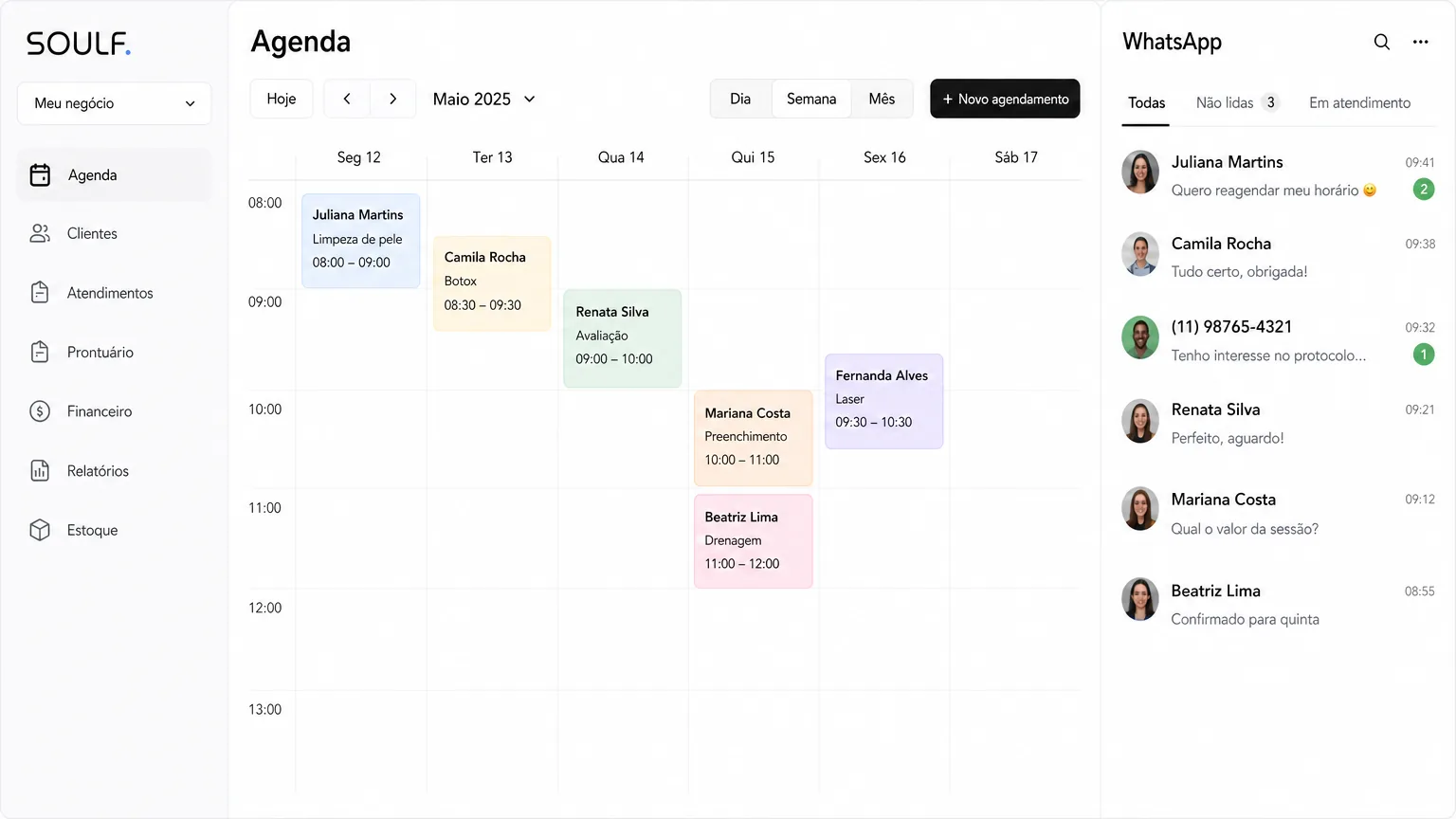
A reminder sequence the clinic can keep up
The sequence is the set of messages every booking receives, always at the same moment, with nobody pressing send. A good starting point:
| When | Message | What the clinic gains |
|---|---|---|
| At booking | Confirmation of day, time, professional and preparation | Fewer questions the day before |
| 48 hours before | Confirmation request with a reschedule option | Time to fill the slot |
| 24 hours before | Second request, only to those who haven't replied | Fewer "I didn't see it" |
| 2 hours before | Short reminder with the address | Less lateness |
What makes the sequence work is what happens with the reply. Someone who answers "reschedule" needs to receive free slots in the same conversation. Those who haven't replied 24 hours before become a list the front desk reviews in the morning, not a pile of lost chats on a phone.
What to measure
You can't improve what nobody counts. Three numbers are enough to start:
- Confirmation rate: how many bookings were confirmed before the day.
- No-show rate: how many booked slots didn't happen, by professional and by weekday.
- Recovered slots: how many slots freed by rescheduling were filled.
Track them for four weeks before changing the sequence. One change at a time, or you won't know what worked.
Founder of Soulf and Smart IT Consulting. Writes about applied AI for service businesses, WhatsApp service and management.